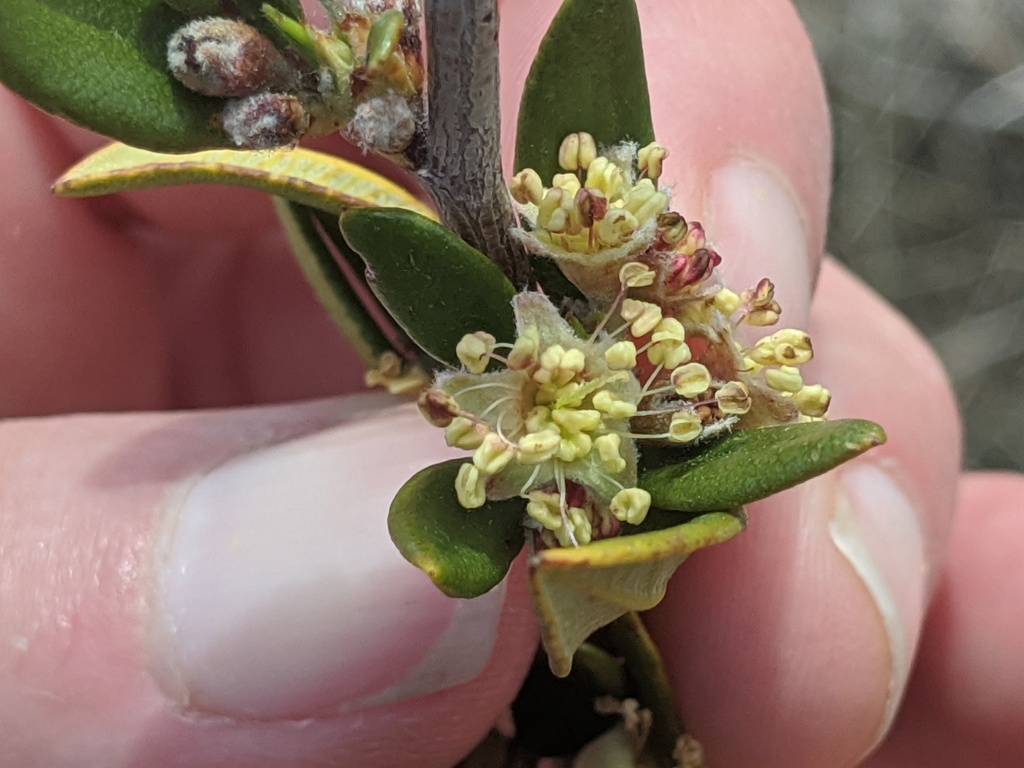
This beautiful pinkish penstemon is Steptoe Valley Beardtongue (Penstemon immanifestus), part of the Figwort Family (Scrophulariaceae). It grows from 5,000 to 6,000 feet on sandy soils, and I found it near EskDale, Utah. It is only found in Utah and Nevada. It grows about one-foot tall, and flowers are over an inch long. Stems are glabrous (smooth), and the staminode (yellow part in flower above) is bearded (hairy).
Because of it's limited distribution, I couldn't find much info about it. Here's a link to the USDA Plants Database.
Saturday, May 18, 2013
Monday, May 13, 2013
Spring Wildflowers in Pole Canyon
Hi! After a year's hiatus, I'm back!
This has been a great spring for wildflowers. Even though we had a rather dry winter, April was fairly wet, and I've been seeing a lot. This year I've been focusing on photographing the flowers in a particular area and then posting them all together. This helps people who are hiking in that area see them all together. It's also helped me to find a few more plants I need to key out and include on this blog.
To see the spring wildflowers along Pole Canyon trail in Great Basin National Park, click here.
This has been a great spring for wildflowers. Even though we had a rather dry winter, April was fairly wet, and I've been seeing a lot. This year I've been focusing on photographing the flowers in a particular area and then posting them all together. This helps people who are hiking in that area see them all together. It's also helped me to find a few more plants I need to key out and include on this blog.
To see the spring wildflowers along Pole Canyon trail in Great Basin National Park, click here.
Sunday, April 8, 2012
Anderson's Buttercup - Ranunculus andersonii
This was my first native wildflower I saw this year. I didn't know what it was, which I have to admit, made it extra special. Thanks to my friend Glenn, I learned it's Anderson's buttercup (Ranunculus andersonii) a member of the Buttercup Family-Ranunculaceae.
It grows in the western U.S. and prefers sagebrush areas. The petals can be white or pinkish. The stamens and pistils are yellow. The flower is borne on a leafless stalk. The leaves are usually in a basal rosette, with three double-lobed leaflets at the end of a petiole.

For more info about Anderson's buttercup, click here.
It sure feels good to have a new flower to add to this blog!
It grows in the western U.S. and prefers sagebrush areas. The petals can be white or pinkish. The stamens and pistils are yellow. The flower is borne on a leafless stalk. The leaves are usually in a basal rosette, with three double-lobed leaflets at the end of a petiole.
For more info about Anderson's buttercup, click here.
It sure feels good to have a new flower to add to this blog!
Tuesday, April 3, 2012
2012
I've been seeing some great spring wildflowers already this year: Indian paintbrush (Castilleja angustifolia), Nevada biscuitroot (Lomatium nevadense), spiny phlox (Phlox hoodii), and more. I will try to get some photos posted soon.
If you don't want to wait, you can see some wildflower photos on my Desert Survivor blog. The wildflowers aren't the focus of those posts, but you'll be able to see where I'm finding them.
Thanks for stopping by. I have about 300 plants featured on this blog--only 700 to go!
If you don't want to wait, you can see some wildflower photos on my Desert Survivor blog. The wildflowers aren't the focus of those posts, but you'll be able to see where I'm finding them.
Thanks for stopping by. I have about 300 plants featured on this blog--only 700 to go!
Saturday, July 9, 2011
Red Creek Buckwheat - Johanneshowellia puberula
This pretty member of the Buckwheat Family (Polygonaceae) is Red Creek buckwheat (Johanneshowellia puberula), with a previous genus name of Eriogonum. It grows only in Utah, Nevada, and California from valley bottoms up to the pinyon-juniper community.
Flowers are small and turn into little red berries. For more info about Red Creek buckwheat, click here.
Friday, July 8, 2011
Coyote Gilia - Aliciella triodon
This branching plant a few inches high (up to 13 cm) is coyote gilia (Aliciella triodon), and formerly with the genus name Gilia. It's in the Phlox Family (Polemoniaceae) and grows in gravelly substrates in pinyon-juniper areas in the southwestern U.S. Flowers are white and each petal is three-lobed.
For a description of coyote gilia, click on the Jepson manual treatment.
Tuesday, July 5, 2011
Fendler's Sandmat - Chamaesyce fendleri
This low growing plant is in a family not yet shared on this blog, the Euphoriabeceae, or Spurge Family. It's called Fendler's sandmat (Chamaesyce fendleri), with a previous genus name of Euphorbia. It grows at lower elevations in the western U.S.
For more info about Fendler's sandmat from Southwest Colorado Wildflowers (a great resource), click here.
Subscribe to:
Posts (Atom)